

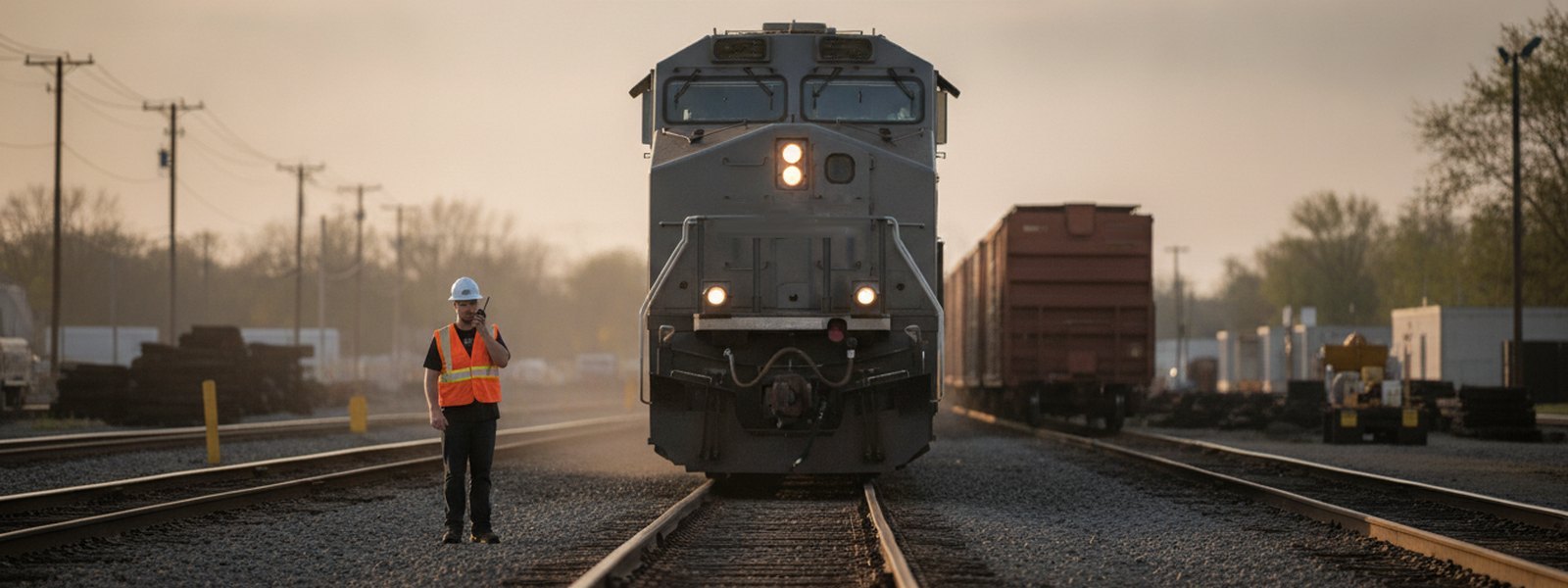
Rail Services Company Valuation
29 valuation methods · 43 industries · Results in under 10 minutes
In short
A rail services company is valued on the higher of two readings: its earnings before rent, less its lease obligations, and what its locomotives, railcars and track equipment would bring in an orderly sale. The operating ratio moves the multiple.
Who this is for
Owners of short line and regional railroads, switching and terminal operators, and railcar repair and transload companies preparing to sell or bring in a partner, and buyers who need earnings and equipment value read together.
How is a rail services company valued?
VA values a rail services company on the higher of two readings. The first capitalizes earnings before interest, tax, depreciation, amortization and rent (EBITDAR), then subtracts the capitalized lease obligation, so leased and owned equipment compare on the same basis. The second is fleet value: what the locomotives, railcars and track equipment would bring in an orderly sale, from their original cost and age. The higher of the two sets the value, and the fleet value acts as a floor. A discounted cash flow, comparable companies and precedent transactions check the result. This tool is informational only. Output is driven by your inputs and does not constitute a formal appraisal or certified valuation.
What drives the value of a rail services company?
- Carloads by customer, and how long the largest shippers have stayed
- Agreements with the connecting Class I railroads, and the terms of interchange
- The operating ratio, the measure railroads are judged on
- Locomotives and railcars: their age, condition and the overhauls due
- Owned track and land compared with lines leased from a larger railroad
- Transload, car storage and switching revenue alongside line haul
What lowers the value of a rail services company?
- A few shippers or one plant behind most of the carloads
- Overhauls due on older locomotives
- Interchange terms set by a larger railroad
- A leased line with little time left on the lease
How much is a rail services company worth? A worked example
Earnings against the equipment
A short line railroad has $12 M of revenue, $2.4 M of EBITDA and $400 K of locomotive and railcar lease payments, so $2.8 M of EBITDAR. At the model's 5.6× (its base, raised for an 84% operating ratio), less $2.8 M for the leases capitalized at seven times rent, the earnings reading is about $12.9 M. Its locomotives, railcars and track equipment, bought for $15 M and six years old on average, would bring about $6.63 M in an orderly sale. The model takes the higher reading, and after $4 M of debt and $800 K of cash the equity is about $9.68 M. In a year with $1 M of EBITDA, the earnings reading falls to about $5.04 M, so the equipment sets the value and the equity comes to about $3.43 M.
Illustrative figures from the industry model alone. A full report blends it with a discounted cash flow, comparable companies and precedent transactions.
Value your rail services company in under 10 minutes
- 1.Upload your financial statements, or type the figures in.
- 2.Confirm the add-backs and the industry details the model asks for.
- 3.Get a valuation range, the methods behind it and a PDF memorandum.
Which numbers matter most?
EBITDAR
Earnings before interest, tax, depreciation, amortization and rent. Adding rent back puts companies that lease their equipment and companies that own it on the same footing.
Operating ratio
Operating expenses, depreciation included, as a share of revenue. Below the model's reference point it raises the multiple; above it, it lowers it.
Fleet original cost
What the locomotives, railcars and track equipment cost when bought. With their age it sets the orderly-sale value of the fleet. Without it, VA estimates the cost from the net value of equipment on the balance sheet.
Fleet age
The average age of the locomotives and railcars. Older equipment is worth less in a sale and needs replacing sooner. You can set it on the valuation page; without it, VA assumes a typical age.
Carloads per customer
Carloads handled for each shipper in a year. Buyers read how much of the traffic depends on a few plants or terminals.
Lease obligations
What the leases commit the company to. VA estimates the obligation from the annual rent and subtracts it from the earnings reading; buyers also read the lease liability on the balance sheet.
What do you need to value a rail services company?
- Profit and loss statements and balance sheets, ideally for the last three years
- Figures for the current year to date
- A list of add-backs: the owner's pay and perks, and any one-off costs
- Loan and lease balances
- The equipment list: locomotives, railcars and track equipment, each with its year and original cost
- Carloads and revenue by customer
- Operating and interchange agreements, and any line leases
Example scenarios
A plant that closes
A large shipper on the line closes a plant and carloads fall for a year. The worked example shows what happens when earnings drop: the locomotives and railcars set the value.
Owned track or a leased line
One railroad owns its track and land; another operates a line leased from a larger railroad. The first pays no rent on the line, which shows in its earnings, and a buyer also weighs the property it owns.
Further reading
Business Valuation Methods Explained: DCF vs. Comps vs. Precedent Transactions
The five business valuation methods professionals actually use (DCF, comparable companies, precedent transactions, SDE/EBITDA multiples, and asset-based), when each wins, and how they combine into one defensible number.
How to Value a Dental Practice: Collections, EBITDA, and What DSOs Actually Pay
Dental practice valuation explained: the percentage-of-collections rule, when EBITDA multiples take over, what drives DSO offers, and a worked example for a $900K practice.
How to Value an HVAC Business in 2026: SDE and EBITDA Multiples
HVAC businesses sell for about 2x to 3.3x SDE for small shops and 5x to 9x EBITDA for larger firms. See 2026 multiples by size and what drives the number.
Frequently asked questions
How is a rail services company valued?
On the higher of its earnings before rent, less its lease obligations, and the orderly-sale value of its locomotives, railcars and track equipment. In a weak year the equipment sets the floor.
Does the fleet reading suit locomotives and railcars?
It uses one age schedule for all equipment, built around trucks, with a discount for an orderly sale. Locomotives and railcars often hold their value longer, so for an older fleet the reading can sit below what an appraiser would find. When earnings set the value, as they usually do, it makes no difference; when the fleet sets it, an appraisal of the locomotives and railcars is the better guide, and a buyer will commission one.
Does the model value the track?
Not as property. The fleet reading covers the locomotives, railcars and track equipment. Owned track and land show up in earnings, since no rent is paid on them, and a buyer will also look at them as property.
Why does the operating ratio matter?
It is the share of revenue spent running the railroad, depreciation included, and it is the measure railroads are judged on. The model raises its multiple when the ratio is below its reference point and lowers it above.
How is leased equipment treated?
Rent is added back to earnings, and a lease obligation estimated from the rent is subtracted. That puts a leased fleet on the same footing as an owned one.
Is this a certified appraisal?
No. This is an informational estimate. A bank loan, a partner buyout or an estate matter may require a certified business appraisal, which this does not replace.
Terms used on this page
- EBITDAR
- EBITDA before rent and lease costs. It puts companies that lease their equipment and companies that own it on the same footing.
- Orderly liquidation value
- What equipment would bring in a sale run over a reasonable period, rather than a forced auction.
- Enterprise value
- The value of the business itself, before debt is subtracted and cash added. The owner's proceeds come from what is left.
- Valuation multiple
- The number earnings are multiplied by to reach a value. It rises with how durable the earnings are and how easily a new owner can keep them.
As featured in
Value your rail services company
Get a valuation range with the methods behind it and a PDF memorandum in under 10 minutes.
Related industries
Logistics & Transport
Value a trucking, logistics or transportation company on the higher of its earnings before rent and what its fleet would bring in an orderly sale.
Marine & Port Services
Value a marine towing, barge or port services company on the higher of its earnings before rent and what its vessels would bring in an orderly sale.
Heavy Haul
Value a heavy haul or specialized transport company on the higher of its earnings before rent and what its tractors and trailers would bring in a sale.
Trucking
Value an asset-based trucking company on the higher of its earnings before rent and what its fleet would bring in an orderly sale.
Last reviewed September 26, 2026 against VA's valuation models.