

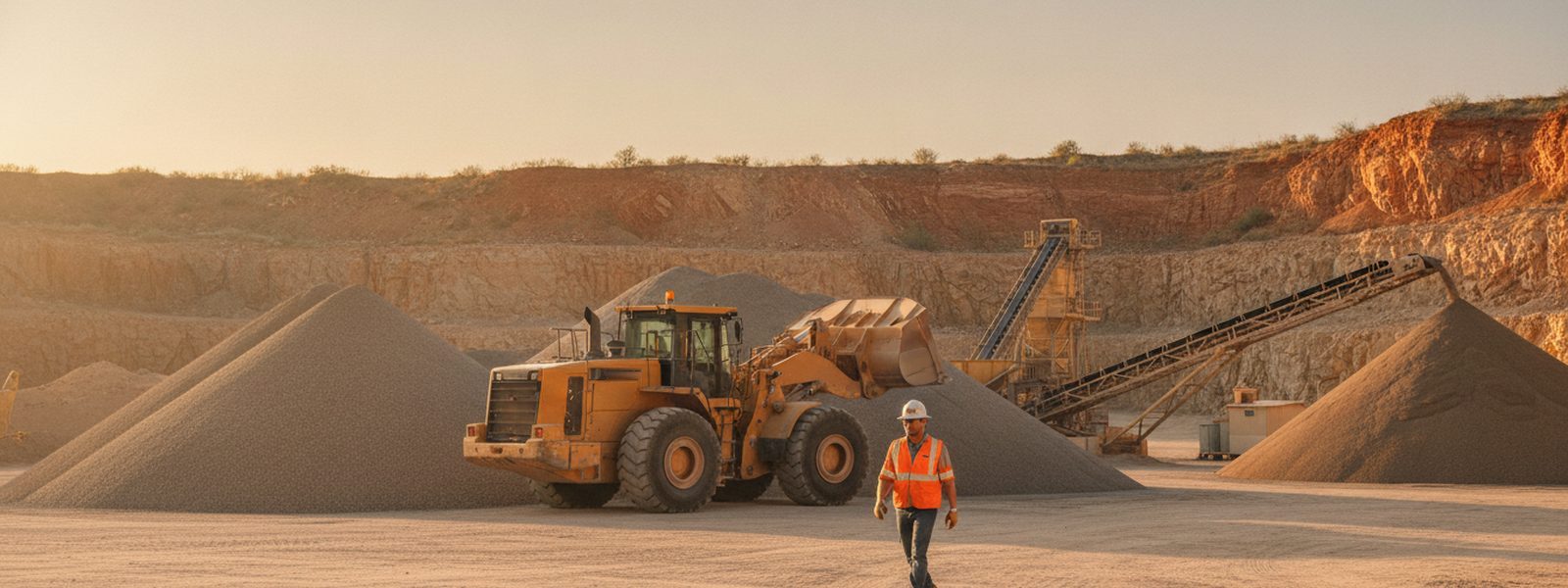
Quarry and Construction Materials Valuation
29 valuation methods · 43 industries · Results in under 10 minutes
In short
A quarry or aggregates company is valued as a depleting reserve: the after-tax margin on each permitted ton, discounted over the years the reserves last, less reclamation. Price and cost per ton, reserve life and permits shape the value.
Who this is for
Owners of quarries, sand and gravel pits and aggregates operations supplying contractors and ready-mix plants, preparing to sell or bring in a partner, and buyers who need permitted reserves, price and cost per ton, and reclamation read together.
How is a quarry valued?
VA values a quarry or aggregates company as a depleting reserve. The after-tax margin on each ton is discounted over the years the permitted reserves last, with nothing assumed after they run out, and the cost of reclamation is subtracted; when no figure is entered, VA estimates it from lifetime revenue. Cross-checks on the value of the reserves in the ground and on annual production carry a smaller weight, and the net value of property and equipment sets a floor under the result. In a full report this reserve reading carries the most weight, with comparable companies and precedent transactions alongside. A ready-mix or asphalt producer without its own reserves is valued as a manufacturer instead. This tool is informational only. Output is driven by your inputs and does not constitute a formal appraisal or certified valuation.
What drives the value of a quarry?
- Permitted reserves, and the years of production they support
- Price per ton, and how far the local market is from the next quarry
- Cash cost per ton, including labor, fuel, equipment and royalties
- Permits and zoning, and the chance of expanding the reserve
- Reclamation obligations, and the bonds behind them
- Customers: contractors, ready-mix plants and public road programs
What lowers the value of a quarry?
- Reserves that run out within a few years
- Cash costs rising faster than prices
- Permits or zoning that limit expansion
- Reclamation costs above what is bonded
How much is a quarry worth? A worked example
A quarry, as a depleting reserve
A quarry holds 20 million tons of permitted reserves and sells 800,000 tons a year at $14 a ton, with a cash cost of $10 a ton, so each ton leaves $4 before tax. VA's reserve model discounts the after-tax margin over the 25 years the reserves last at 18%, about $13.1 M. With no reclamation figure entered, it sets aside four percent of lifetime revenue, $11.2 M due when the quarry closes and worth $179 K today, which leaves about $12.9 M. Cross-checks on the reserves in the ground ($28 M at the middle of their band) and on production ($10.8 M) carry an eighth of the weight each, bringing the reading to about $14.6 M before debt. After $3 M of debt and $500 K of cash, the equity is about $12.1 M. With a cash cost of $11 a ton, the reserve value falls to about $9.66 M and the equity to about $9.26 M.
Illustrative figures from the industry model alone. A full report blends it with a discounted cash flow, comparable companies and precedent transactions.
Value your quarry in under 10 minutes
- 1.Upload your financial statements, or type the figures in.
- 2.Confirm the add-backs and the industry details the model asks for.
- 3.Get a valuation range, the methods behind it and a PDF memorandum.
Which numbers matter most?
Permitted reserves
Tons the company is allowed to extract. With annual production, they set the years the value runs over.
Netback per ton
Price per ton less cash cost per ton. It is the margin the reserve model discounts, after tax.
Reserve life
Years of production the reserves support. Nothing is valued beyond it, so longer reserves raise the value.
Reclamation obligation
What it will cost to restore the site. VA subtracts today's value of it; without a figure, it estimates one from lifetime revenue.
What do you need to value a quarry?
- Profit and loss statements and balance sheets, ideally for the last three years
- Figures for the current year to date
- A list of add-backs: the owner's pay and perks, and any one-off costs
- Loan and lease balances
- A reserve report or survey of permitted tons
- Tons sold, price and cash cost per ton for recent years
- Permits, reclamation plans and bonds
Example scenarios
Costs that rise
Fuel, labor and royalties push the cash cost per ton up. The worked example shows what a dollar more per ton does to the reserve value.
A reserve that could grow
Neighboring land could extend the quarry's life if it were rezoned. The model values the permitted reserves only; buyers may pay for the option, but usually through terms tied to the permit.
Further reading
Business Valuation Methods Explained: DCF vs. Comps vs. Precedent Transactions
The five business valuation methods professionals actually use (DCF, comparable companies, precedent transactions, SDE/EBITDA multiples, and asset-based), when each wins, and how they combine into one defensible number.
WACC Explained: Why Your Discount Rate Can Make or Break a Valuation
WACC is one of the most misunderstood terms in business valuation. Here's what it is, why it matters, and how it directly affects what your business is worth.
DCF Analysis Explained for Private Companies
A clear, practical guide to discounted cash flow analysis for private companies. Learn the five key steps, how to estimate WACC without public market data, terminal value approaches, and common pitfalls to avoid.
Frequently asked questions
How is a quarry valued?
As a depleting reserve: the after-tax margin on each ton, discounted over the years the permitted reserves last, less reclamation, with cross-checks on the reserves in the ground and on production. In a full report it carries the most weight.
Why is no value assumed after the reserves run out?
Because a quarry stops producing when its permitted reserves are gone. Valuing it on a multiple of earnings would assume it produces forever and overstate what it is worth.
Do reserves without a permit count?
No. The model values permitted reserves. Land that could be permitted later is an option buyers negotiate over, often through terms tied to the permit.
How is a ready-mix or asphalt plant valued?
A plant without its own reserves is valued as a manufacturer: on its earnings, with a discounted cash flow, comparable companies and precedent transactions.
Should I enter the reclamation cost?
Yes, if you have it. Without it, VA estimates reclamation from lifetime revenue, and a real figure from your permits or bonds is firmer.
Is this a certified appraisal?
No. This is an informational estimate. A bank loan, a partner buyout or an estate matter may require a certified business appraisal, which this does not replace.
Terms used on this page
- Discount rate
- The yearly return a buyer requires for the risk of owning the business. A higher rate lowers what future cash is worth today.
- Enterprise value
- The value of the business itself, before debt is subtracted and cash added. The owner's proceeds come from what is left.
- Comparable companies
- A method that values a business at the multiples of earnings or revenue at which similar companies are valued.
- Precedent transactions
- A method that values a business at the multiples paid in past sales of similar companies.
- Asset floor
- The value of the company's own assets, such as equipment and inventory, net of what it owes. VA does not let a valuation fall below it.
As featured in
Value your quarry
Get a valuation range with the methods behind it and a PDF memorandum in under 10 minutes.
Related industries
Mining & Resources
Value a mine, quarry or producing well on reserves and netback: a finite cash flow to depletion, less closure cost, never a perpetuity multiple.
Construction
Value a construction or contracting business on its earnings, with backlog, bonding, work in progress and the owner's role read the way buyers read them.
Building Products
Value a building products manufacturer on its earnings, with dealer channels, housing exposure and plant capacity read the way buyers read them.
Heavy Haul
Value a heavy haul or specialized transport company on the higher of its earnings before rent and what its tractors and trailers would bring in a sale.
Last reviewed September 26, 2026 against VA's valuation models.