

Dlaczego wycena firmy SaaS jest inna
Przy przejęciu tradycyjnej firmy pierwsze pytanie zwykle brzmi: „Jaka jest EBITDA?". Przy transakcji SaaS pierwsze pytanie to: „Jaki jest ARR i czy rośnie?".
Firmy działające w modelu Software-as-a-Service rządzą się innymi prawami ekonomicznymi niż biznesy stacjonarne. Mają wysokie marże brutto, niskie koszty krańcowe i przychody, które odnawiają się automatycznie. Te cechy uzasadniają wyceny premium, ale tylko wtedy, gdy rozumiesz, które metryki naprawdę robią różnicę dla kupujących.
Kluczowe metryki, których używają kupujący
Annual Recurring Revenue (ARR)
ARR to puls każdej firmy SaaS. Reprezentuje on zannualizowaną wartość wszystkich aktywnych umów subskrypcyjnych i jest najczęstszą podstawą mnożników wyceny w transakcjach na rynku oprogramowania.
Firma generująca 1 mln USD ARR przy 80% marży brutto i 30% rocznym wzroście przyciągnie zupełnie inny mnożnik niż firma o tym samym ARR z płaskim wzrostem i 60% marżą. ARR mówi o skali; pozostałe metryki mówią o jakości.
Co śledzić: całkowity ARR, nowy ARR pozyskany w skali miesiąca, ARR z ekspansji (upselle) oraz utracony ARR (churn).
Net Revenue Retention (NRR)
NRR mierzy, co dzieje się z przychodami z istniejącej bazy klientów w czasie, uwzględniając ekspansje, ograniczenia zakresu i rezygnacje, ale nie nowych klientów. To jeden z najsilniejszych sygnałów, jakie ocenia kupujący.
- NRR powyżej 110%: Twoi obecni klienci wydają więcej każdego roku, jeszcze zanim pozyskasz choć jednego nowego klienta. To rzadkość i uzasadnia wycenę premium.
- NRR między 100–110%: Solidnie. Umiarkowana ekspansja kompensuje część churnu.
- NRR poniżej 100%: Przychody kurczą się bez pozyskiwania nowych klientów. To sygnał ostrzegawczy, który kupujący agresywnie uwzględnią w cenie.
Wysoki NRR redukuje postrzegane ryzyko. Mówi kupującemu: nawet jeśli wzrost wyhamuje, firma i tak się rozwija.
Marża brutto
Marże brutto w SaaS zwykle mieszczą się w przedziale 65–85%. Górny pułap jest osiągalny dla czysto programistycznych platform; firmy ze znacznymi kosztami hostingu, wsparcia lub usług profesjonalnych plasują się niżej.
Kupującym zależy, bo marża brutto decyduje o tym, ile z każdego dolara przychodu trafia na sprzedaż, R&D i ostatecznie zysk. Firma z 80% marżą brutto ma znacznie większą dźwignię niż taka z 55%, nawet przy identycznym przychodzie.
Wskaźnik churnu
Miesięczny churn to procent klientów (lub przychodów) traconych co miesiąc. 2% miesięcznego churnu brzmi rozsądnie, ale w skali roku składa się do prawie 22%, co oznacza, że musisz zastąpić niemal jedną czwartą bazy klientów rocznie tylko po to, by pozostać na tym samym poziomie.
Docelowe benchmarki dla silnych firm SaaS:
- Logo churn: Poniżej 1% miesięcznie
- Revenue churn: Poniżej 0,5% miesięcznie (klienci o wyższej wartości zwykle zostają)
Customer Acquisition Cost (CAC) i okres zwrotu
Kupujący chcą wiedzieć, ile wydajesz na pozyskanie klienta i jak długo trwa odzyskanie tej inwestycji. Okres zwrotu CAC poniżej 18 miesięcy jest ogólnie uznawany za zdrowy w SaaS skierowanym do segmentu SMB. Dla firm zorientowanych na enterprise akceptowalne jest 24–30 miesięcy, biorąc pod uwagę wyższe wartości umów i niższy churn.
Stosunek Customer Lifetime Value (LTV) do CAC to powszechna metryka podsumowująca. Wskaźnik LTV:CAC powyżej 3:1 świadczy o efektywnym silniku pozyskiwania klientów.
Jak wyglądają mnożniki dzisiaj
Wyceny SaaS wyraża się zwykle jako mnożnik ARR (dla firm o wysokim wzroście) albo jako mnożnik EBITDA (dla rentownych firm o wolniejszym wzroście).
Mnożniki ARR różnią się znacznie w zależności od tempa wzrostu i jakości biznesu:
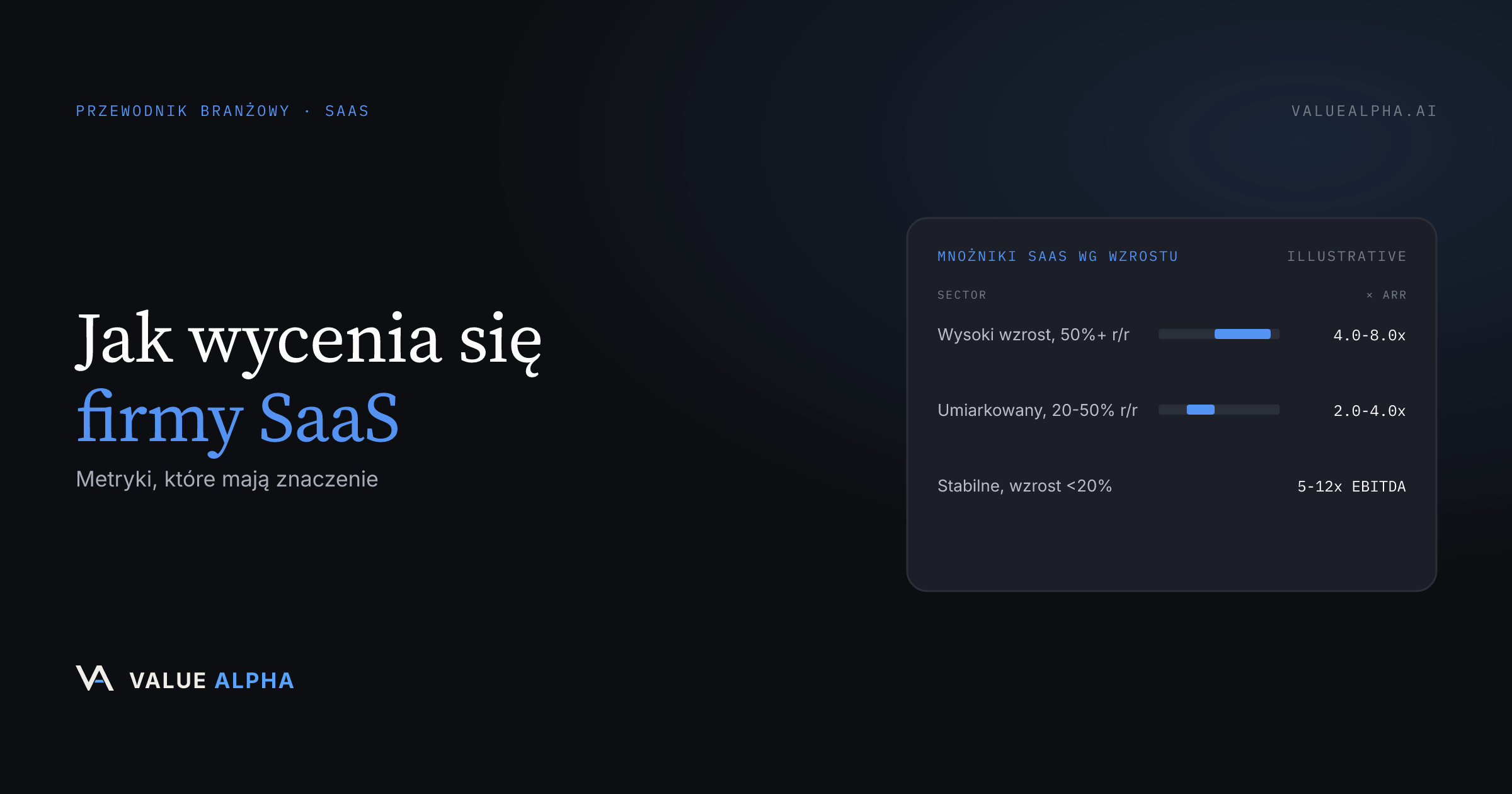
- SaaS o wysokim wzroście (50%+ wzrostu ARR rok do roku): 4–8x ARR
- Umiarkowany wzrost (20–50% rok do roku): 2–4x ARR
- Stabilne/rentowne (<20% wzrostu): Często lepiej wyceniane na bazie EBITDA (5–12x)
„Rule of 40", gdzie tempo wzrostu plus marża EBITDA przekraczają 40%, to szybki filtr, którym kupujący oddzielają efektywnie prowadzone firmy SaaS od tych, które przepalają gotówkę w sposób nie do utrzymania.
Przygotowanie firmy SaaS do wyceny
Uporządkuj swoje metryki. Kupujący poproszą o miesięczne dane kohortowe, listę klientów z ARR w rozbiciu na konta oraz podział na przychody nowe vs. z ekspansji vs. utracone. Jeśli nie potrafisz szybko ich dostarczyć, sygnalizuje to niedojrzałość operacyjną.
Udokumentuj koncentrację klientów. Jeśli Twój największy klient odpowiada za ponad 20% ARR, kupujący mocno zdyskontują to ryzyko. Jeśli jesteś w takiej sytuacji, zacznij dywersyfikować, zanim wyjdziesz na rynek.
Oddziel zależność od założyciela. Firmy SaaS, w których CEO jest jednocześnie głównym sprzedawcą i jedyną osobą rozumiejącą architekturę produktu, trudniej przekazać. Kupujący płacą więcej za zespoły, a nie za pojedyncze osoby.
Zrozum własne metryki. Nic nie przyspiesza transakcji ani jej nie wykoleja szybciej niż to, jak pewnie omawiasz swoje liczby. Narzędzia takie jak ValueAlpha pomogą Ci przeprowadzić wycenę na własnych warunkach, zanim siądziesz po drugiej stronie stołu naprzeciw kupującego, dzięki czemu zrozumiesz, co napędza Twoją liczbę i co byłbyś gotów zaakceptować.
Podsumowanie
Firmy SaaS należą do najcenniejszych rodzajów przedsiębiorstw, które można posiadać i sprzedawać, ale tylko wtedy, gdy leżące u ich podstaw metryki opowiadają przekonującą historię. ARR ma znaczenie, ale NRR, churn, marża brutto i efektywność wzrostu liczą się dla wymagających kupujących równie mocno.
Znaj swoje liczby. Popraw to, co możesz, zanim wyjdziesz na rynek. A gdy będziesz gotów zrozumieć, ile naprawdę warta jest Twoja firma, przeprowadź wycenę SaaS w ValueAlpha - korzysta ona z tych samych mnożników ARR, korekt NRR i benchmarków Rule of 40, których faktycznie używają kupujący.
ValueAlpha Team
Eksperci ds. finansów i AI
Wyszkoleni w MBA specjaliści od wyceny i inżynierowie budujący przyszłość wyceny firm prywatnych. Łączymy instytucjonalne metodologie finansowe z AI, aby obronne wyceny były dostępne dla każdego właściciela firmy.
LinkedInPowiązane artykuły
16 lutego 2026 · 5 min
Understanding EBITDA Multiples by Industry
Learn what EBITDA multiples are, how they are used in business valuations, and what typical ranges look like across major industries including technology, healthcare, manufacturing, retail, and professional services.
24 marca 2026 · 5 min
What Buyers Actually Look At in a Business Valuation
Forget vanity metrics. Here are the 5 factors that move the needle when a buyer evaluates your business - and how to strengthen each one.