

Podsumowanie
Kalkulator wyceny firmy Value Alpha to darmowe narzędzie, które zwraca VA Range - szacunki wartości przedsiębiorstwa w scenariuszach bear, base i bull - na podstawie czterech danych: branży, przychodu, EBITDA oraz tempa wzrostu. Opiera się on na medianach mnożników EBITDA z ponad 11 000 spółek porównywalnych i zwraca wyniki w mniej niż sekundę. Bez rejestracji, bez karty kredytowej, bez podawania adresu e-mail.
Ten poradnik wyjaśnia dokładnie, jak kalkulator generuje swój wynik, co oznaczają liczby oraz kiedy oszacowanie wystarcza, a kiedy potrzebujesz pełnego zestawu silników VA.
Dlaczego kalkulator, a nie wycena na życzenie
Każdy właściciel firmy, kupujący i doradca zadawał to samo pytanie: ile ta firma jest warta? Odpowiedź zwykle przychodzi w jednej z dwóch postaci - pojedynczej liczby na ogłoszeniu brokera albo sześciotygodniowego arkusza kalkulacyjnego od firmy wyceniającej. Żadna nie jest idealna. Pojedyncza liczba to zgadywanka wypowiedziana pewnym głosem. Sześciotygodniowy arkusz da się obronić, ale kosztuje tysiące złotych i przychodzi już po podjęciu decyzji.
Kalkulator rozwiązuje ten dylemat. Nie dlatego, że zastępuje rzeczywistą wycenę, ale dlatego, że w kilka sekund daje szybki, dający się obronić przedział oparty na transakcjach porównawczych. Możesz uruchomić dwadzieścia takich wycen w czasie, jaki zajmuje wypicie kawy.
Co robi kalkulator
Kalkulator przyjmuje cztery dane wejściowe:
- Branża - 13 kategorii obejmujących większość wolumenu transakcji w sektorze MŚP (HVAC, B2B SaaS, produkcja, usługi profesjonalne, dystrybucja, e-commerce, usługi medyczne, budownictwo, restauracje, usługi motoryzacyjne, logistyka, usługi ogrodnicze, usługi IT zarządzane)
- Przychód roczny - z ostatnich dwunastu miesięcy, na poziomie sprzedaży
- EBITDA lub SDE - w zależności od tego, co raportują Twoje sprawozdania finansowe
- Wzrost przychodów - roczny procent, dodatni lub ujemny
Zwraca VA Range z trzema punktami: Bear, Base i Bull. Każdy punkt to wartość przedsiębiorstwa wyrażona w złotych. Przedział niesie ze sobą ocenę pewności (od 60 do 94), liczbę transakcji porównawczych dla wybranej branży oraz znacznik czasu AS OF, dzięki czemu zawsze wiesz, kiedy wynik został wygenerowany.
Wynikiem jest przedział. Nigdy nie jest to pojedyncza liczba. Wycena jest przedziałem.
Jak działa matematyka
Kalkulator uruchamia jeden silnik: wyszukanie mediany branżowego mnożnika EBITDA wraz z korektami o wzrost i marżę.
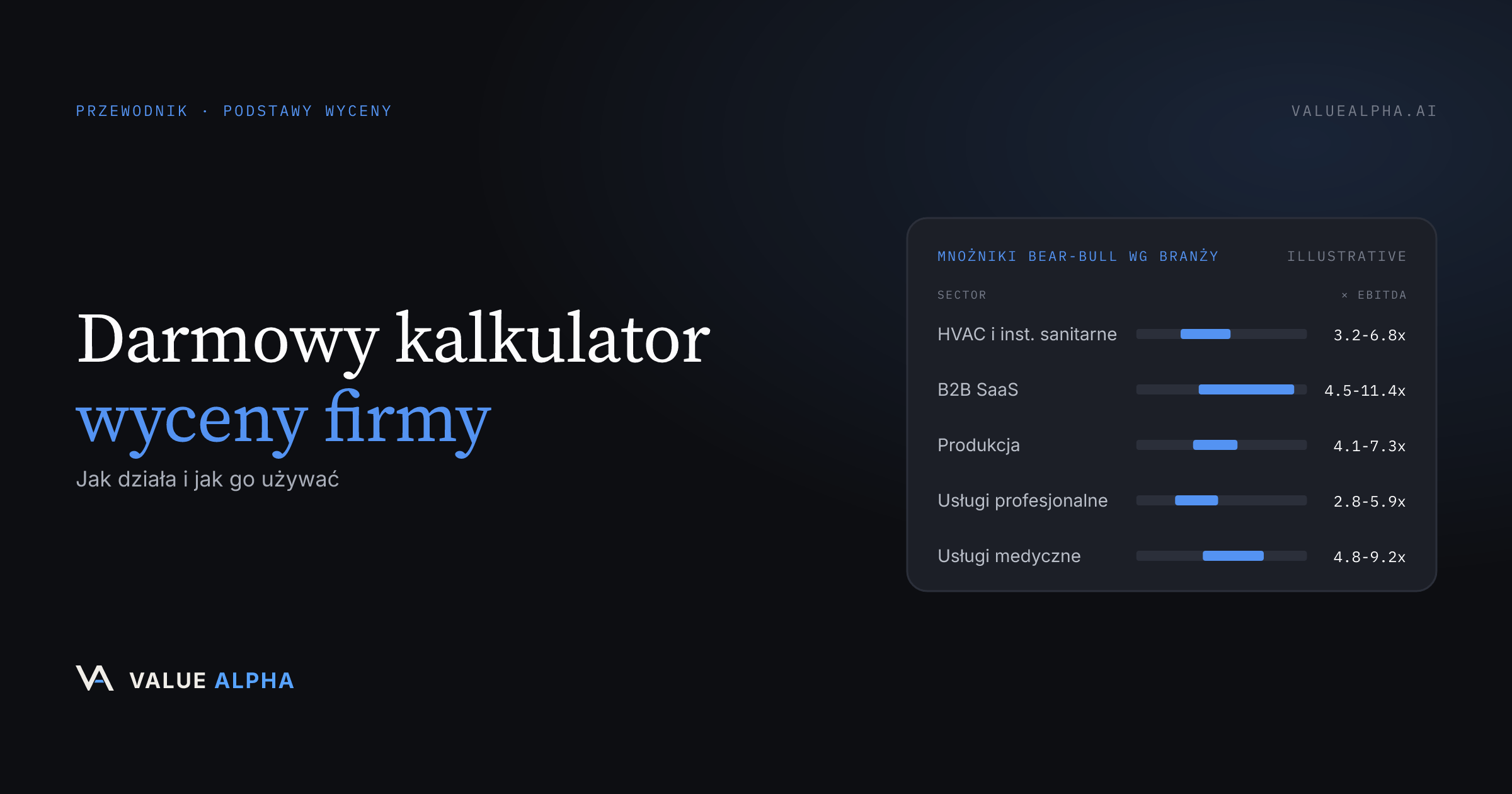
Dla każdej branży kalkulator przechowuje trzy mnożniki - scenariusz bear (20. percentyl), scenariusz base (mediana) oraz scenariusz bull (80. percentyl):
| Branża | Bear | Base | Bull | Transakcje porównawcze |
|---|---|---|---|---|
| HVAC i instalacje sanitarne | 3.2x | 4.8x | 6.8x | 42 |
| B2B SaaS | 4.5x | 7.2x | 11.4x | 58 |
| Produkcja | 4.1x | 5.6x | 7.3x | 63 |
| Usługi profesjonalne | 2.8x | 4.2x | 5.9x | 51 |
| Usługi medyczne | 4.8x | 6.9x | 9.2x | 55 |
Scenariusz base to mediana branżowa. Bear i Bull wyznaczają 20. i 80. percentyl zaobserwowanych transakcji.
Korekta o wzrost
Wzrost ma znaczenie. Firma rosnąca w tempie 20 procent uzyskuje wyższy mnożnik niż firma rosnąca w tempie 3 procent, przy pozostałych warunkach niezmienionych. Kalkulator stosuje korektę liniową skoncentrowaną wokół 8 procent (mediana branżowego tempa wzrostu):
growth_multiplier = 1 + (growth_rate - 8) * 0.02
Firma rosnąca w tempie 20 procent otrzymuje 24-procentowy wzrost swojego mnożnika bazowego. Firma kurcząca się w tempie -5 procent otrzymuje 26-procentowe dyskonto. Scenariusz Bull stosuje dodatkowy optymizm wzrostu na poziomie +10 procent, a scenariusz Bear dodatkowy pesymizm wzrostu na poziomie -10 procent.
Kara za pewność
Kalkulator karze również dane, które wyglądają na nieprawdopodobne. Firma raportująca 0-procentową marżę EBITDA lub 60-procentową marżę EBITDA wywołuje karę od 6 do 12 punktów na ocenie pewności. Nie jest to twarda walidacja - kalkulator i tak działa - ale ocena sygnalizuje, że wynik należy traktować z ostrożnością.
Dlaczego jeden silnik to za mało
Kalkulator jest celowo prosty. Rzeczywista wycena nie jest.
Pełna wycena Value Alpha uruchamia cały zestaw silników VA równolegle. Dzielą się one na dwie grupy:
Silniki podstawowe - uruchamiane przy każdej wycenie:
- DCF - prognozy 5-letnie, WACC, wartość rezydualna, tabele wrażliwości
- Spółki porównywalne - EV/Revenue, EV/EBITDA, P/E z ponad 11 000 spółek referencyjnych
- Transakcje precedensowe - rzeczywiste mnożniki zamkniętych transakcji z 339 transakcji w sektorze MŚP
- Ekonomia jednostkowa bottom-up - przychód na jednostkę, moce produkcyjne, wykorzystanie dla usług
- Wartość aktywów (Asset Floor) - wartość aktywów netto jako dolna granica przedziału
- Monte Carlo - 10 000 symulacji dla pełnego rozkładu prawdopodobieństwa
Silniki branżowe - uruchamiane tylko wtedy, gdy firma się kwalifikuje:
- LBO - model wykupu lewarowanego z docelowym IRR dla transakcji PE i searcherów
- Sum-of-the-Parts - wycena na poziomie segmentów dla holdingów wielobiznesowych i operatorów zdywersyfikowanych
- Biotech SOTP - rNPV portfela skorygowane o ryzyko dla każdego programu lekowego z prawdopodobieństwami faz
- SaaS Rule of 40 - połączenie wzrostu i zysku z korektami o NRR, okres zwrotu CAC oraz magic number
- Jednostka franczyzowa - modele przepływów pieniężnych dla pojedynczej lokalizacji dla operatorów franczyzowych i wielolokalowych
- Wartość nieruchomości (Real Estate Floor) - bazowa wartość nieruchomości dla firm zajmujących własne lokale oraz z branży hotelarskiej
Silniki są następnie łączone przy użyciu branżowych reguł wagowych. Firma biotechnologiczna mocno waży DCF i Biotech SOTP. Firma SaaS waży spółki porównywalne, DCF oraz SaaS Rule of 40. Spółka holdingowa waży Sum-of-the-Parts. Cel typu roll-up w branży HVAC waży transakcje precedensowe, bottom-up oraz LBO. To połączenie stanowi wynik silników VA i generuje finalny VA Range.
Darmowy kalkulator daje Ci jeden silnik. Jest szybki i przydatny. Ale jeśli liczba ma znaczenie - sprzedaż, zakup, wykup wspólnika, kredytodawca - jeden silnik rzadko wystarcza.
Kiedy darmowy kalkulator wystarcza
Skorzystaj z darmowego kalkulatora, gdy:
- Przeglądasz CIM i chcesz w 30 sekund wiedzieć, czy cena wywoławcza mieści się we właściwym przedziale
- Jesteś właścicielem i sprawdzasz wiarygodność opinii o wartości od brokera przed podpisaniem umowy o pośrednictwo w sprzedaży
- Jesteś searcherem i porządkujesz swój pipeline aktywnych okazji
- Jesteś doradcą i ustalasz oczekiwania właściciela na pierwszym spotkaniu
We wszystkich tych przypadkach potrzebujesz szybkości i kierunkowej dokładności, a nie certyfikowanej precyzji.
Kiedy przejść na pełną wycenę
Przejdź na pełną wycenę silnikami VA, gdy stawka jest realna:
- Strukturyzujesz LOI i musisz poprzeć swoją ofertę DCF, spółkami porównywalnymi i transakcjami precedensowymi
- Jesteś właścicielem przygotowującym się do wyjścia na rynek i chcesz wiedzieć, ile faktycznie zapłaci wyrafinowany kupujący
- Decyzja jest realna, a koszt pomyłki jest istotny
- Kredytodawca, inwestor lub wspólnik potrzebuje czegoś więcej niż oszacowania przesiewowego
Pełna wycena działa w niecałą minutę i generuje szczegółowy raport z pełną metodologią, tabelami wrażliwości oraz rozbiciem na scenariusze.
Reguły, których przestrzegamy przy każdym wyniku
Niezależnie od tego, czy uruchamiasz darmowy kalkulator, czy pełną wycenę, obowiązują cztery reguły:
- Przedział, nie punkt. Każdy wynik to VA Range ze scenariuszami Bear, Base i Bull. Nie sprowadzamy go do pojedynczej liczby.
- Ze źródłem, nie zgadnięty. Każdy mnożnik prowadzi z powrotem do rzeczywistej transakcji porównawczej lub opublikowanego zbioru danych. Jeśli nie możesz kliknąć w źródło, to nie jest wycena.
- Z datą, nie statyczny. Każdy wynik niesie ze sobą znacznik czasu AS OF. Wycena bez daty to plotka.
- Z oceną, nie z deklaracją. Każdy wynik niesie ze sobą ocenę pewności. Zaufanie to liczba, a nie przymiotnik.
Gotowy, by go uruchomić?
Otwórz darmowy kalkulator wyceny firmy. Wprowadź przychód, EBITDA, branżę i wzrost. Uzyskaj VA Range w kilka sekund - bez rejestracji, bez karty kredytowej.

Tomasz Felpel
Założyciel i CEO, Value Alpha
Absolwent MBA Columbia Business School i założyciel Value Alpha. Były Global Business Development Manager w IFF, gdzie współtworzył wielomiliardową fuzję z listy Fortune 500. Wiceprezes Startup Lab w Columbia Entrepreneurship Organization.
LinkedIn